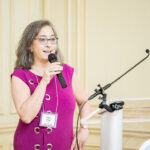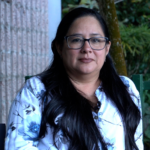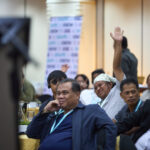

Across the Philippines and the Filipino diaspora, families affected by the so-called “war on drugs” are reclaiming their voices after years of fear and impunity.
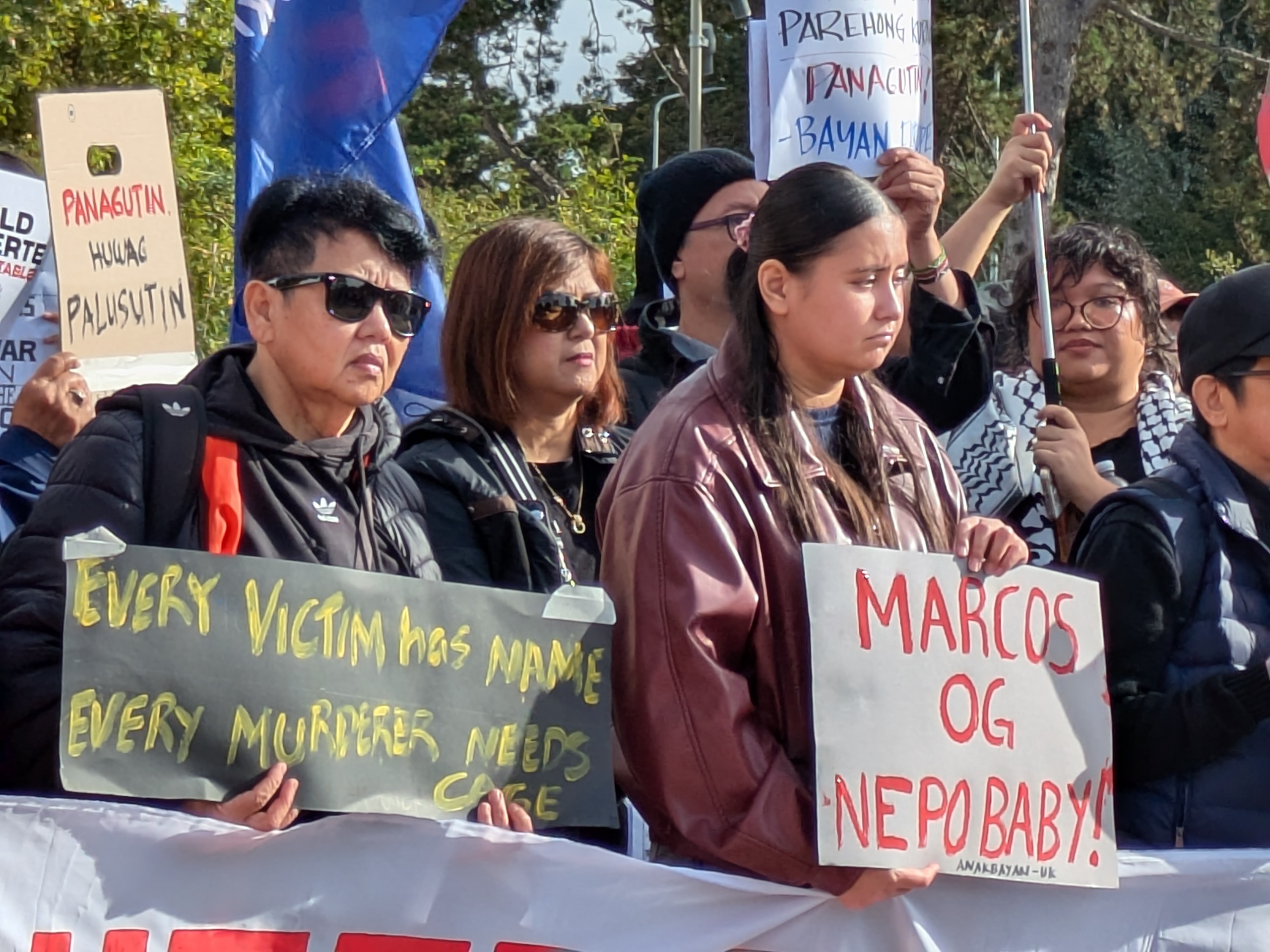
As the International Criminal Court (ICC) moves forward with its case against former Philippine president Rodrigo Duterte, the Filipino human rights movement is navigating a period of renewed momentum—but also intensified disinformation and political pressure.
From 2016 to 2022, Duterte’s so-called “war on drugs” unleashed a wave of violence across the Philippines. Police and government-linked vigilantes killed thousands of people—officially over 7,000, though human rights groups estimate the real toll may be closer to 30,000—often without due process or credible investigations. Many victims were low-income drug users or people merely suspected of involvement. As bodies appeared in the streets, fields, and rivers, families were left reeling while those responsible were shielded from accountability. This climate of fear pushed hundreds of thousands more to surrender to authorities, only to face arrest or neglect instead of meaningful support.
Today, with support from groups like Respond and Break the Silence Against Killings (RESBAK), families are finding strength in one another, reclaiming their stories, and pushing for long-overdue accountability.
But that progress has also triggered new challenges. Last month, Duterte’s camp unsuccessfully sought his release on health grounds—claims advocates say are unproven. “The narrative war remains a challenge,” Debs, a RESBAK organizer, explained. “His arrest is being seen as political revenge . . . more than a step closer to justice for extrajudicial killings victims.” In response, RESBAK has intensified its community work and launched public-facing campaigns to counter disinformation and keep victims’ experiences at the center.
From Local Organizing to The Hague
With support from the Fund for Global Human Rights, families of victims and RESBAK members traveled to The Hague earlier this year to join allies, meet with academic institutions, and participate in a peaceful demonstration outside the ICC.
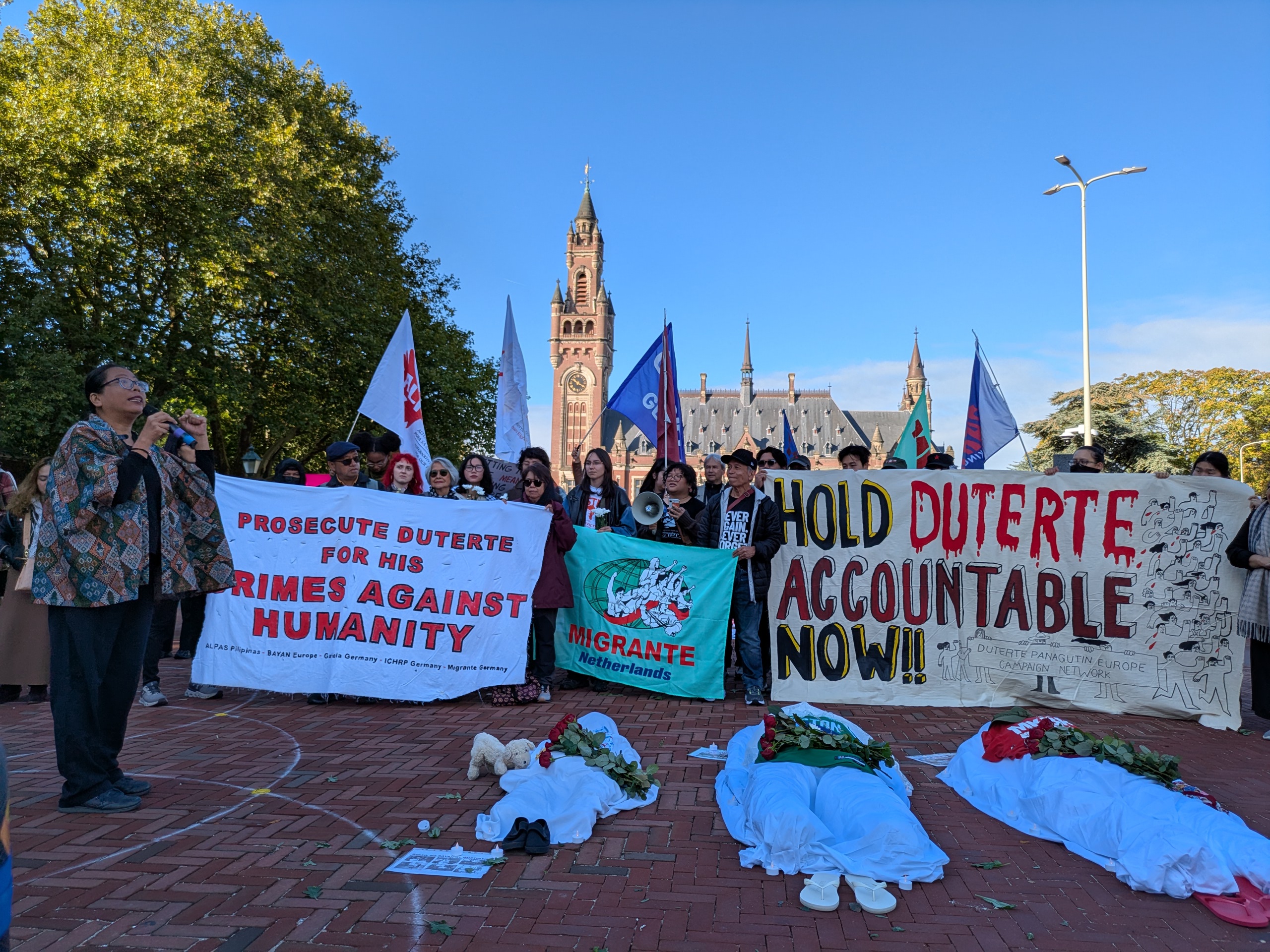
“The trip to The Hague was a crucial step to strengthen the call of the diaspora to voice out the concerns of extrajudicial killings victims,” said Debs. During their visit, families and RESBAK members spoke at academic institutions like Humboldt University, engaged with artists and creators at festivals and public events, and joined allies at a peaceful demonstration outside the ICC. These spaces allowed victims and advocates to directly challenge disinformation circulating online—particularly false claims denying the scale of the killings—and to re-center conversations within Filipino diaspora communities on the experiences, rights, and demands of families seeking justice.
For many families, the experience marked the end of years of forced silence—a period in which they were unable to publicly acknowledge what had happened to their relatives and loved ones. Now, they were finally able to speak out on the world stage. “Being able to go to The Hague with extrajudicial killings victims to call for accountability . . . has been a long, emotional, and challenging journey,” Debs shared.
Sustaining a Community of Support
RESBAK’s work goes far beyond public advocacy. For years, the network has supported families grappling with intimidation, trauma, and government neglect—conditions rooted in the hostile environment Duterte’s regime created for anyone seeking justice. As the government securitized the country’s drug problem, civic space for activism shrank dramatically. Officials promoted the dangerous narrative that human rights defenders were somehow responsible for violent crime, fueling fear and stigmatization and convincing many people that speaking out would only put them in greater danger. In that climate of impunity, accountability for extrajudicial killings seemed for many years like a distant dream.
Throughout this period, RESBAK remained a lifeline. They organized creative workshops and community gatherings, created safe spaces for survivors, and helped families document cases and understand their rights. Their steady presence helped rebuild trust among families and communities, and build resilience at a time when families felt isolated and silenced.
Long-term, flexible funding from the Fund for Global Human Rights has been essential to sustaining this work. “RESBAK’s work . . . has provided a safe space to continue conversations, change narratives, and build the legal case of the victims,” Debs said.

Even with thousands of killings, only a handful of cases have ever been decided in a court of law—and the Philippines still lacks any national program to support survivors. Advocates emphasize that sustained assistance remains critical, especially as the culture of fear created during the “war on drugs” continues under the current administration of President Ferdinand Marcos Jr .
The progress seen today is the result of years of patient organizing, careful documentation, and steadfast belief in the power of families to demand justice. Groups like RESBAK helped build this collective strength long before the ICC case accelerated. Their persistence ensured that when an opening for accountability finally emerged, families were ready—not only to participate but to lead.
A Future Rooted in Accountability
Looking ahead, RESBAK hopes to see institutional remedies that recognize the violations committed during the “war on drugs.” They want protections and support systems for families, acknowledgment of the harm, and a comprehensive justice process that reaches all perpetrators—whether they gave orders or pulled the triggers themselves.
As Debs put it, “We want communities of extrajudicial killings victims to be heard and believed . . . not as a nuisance but as victims of the denial of human rights.” RESBAK’s vision is clear: a Philippines where truth is acknowledged, justice is attained, and no leader can commit or order such abuses with impunity.
The path forward will be long. But through their collective power, survivors, advocates, and grassroots organizers continue to make progress in the fight for accountability.
Stand with activists in the Philippines. Donate now to support community-led efforts for truth, justice, and human rights.