
On her last day as FGHR’s vice president of development and communications, Rona Peligal shares her parting reflections on finding purpose and resolve in human rights activism.
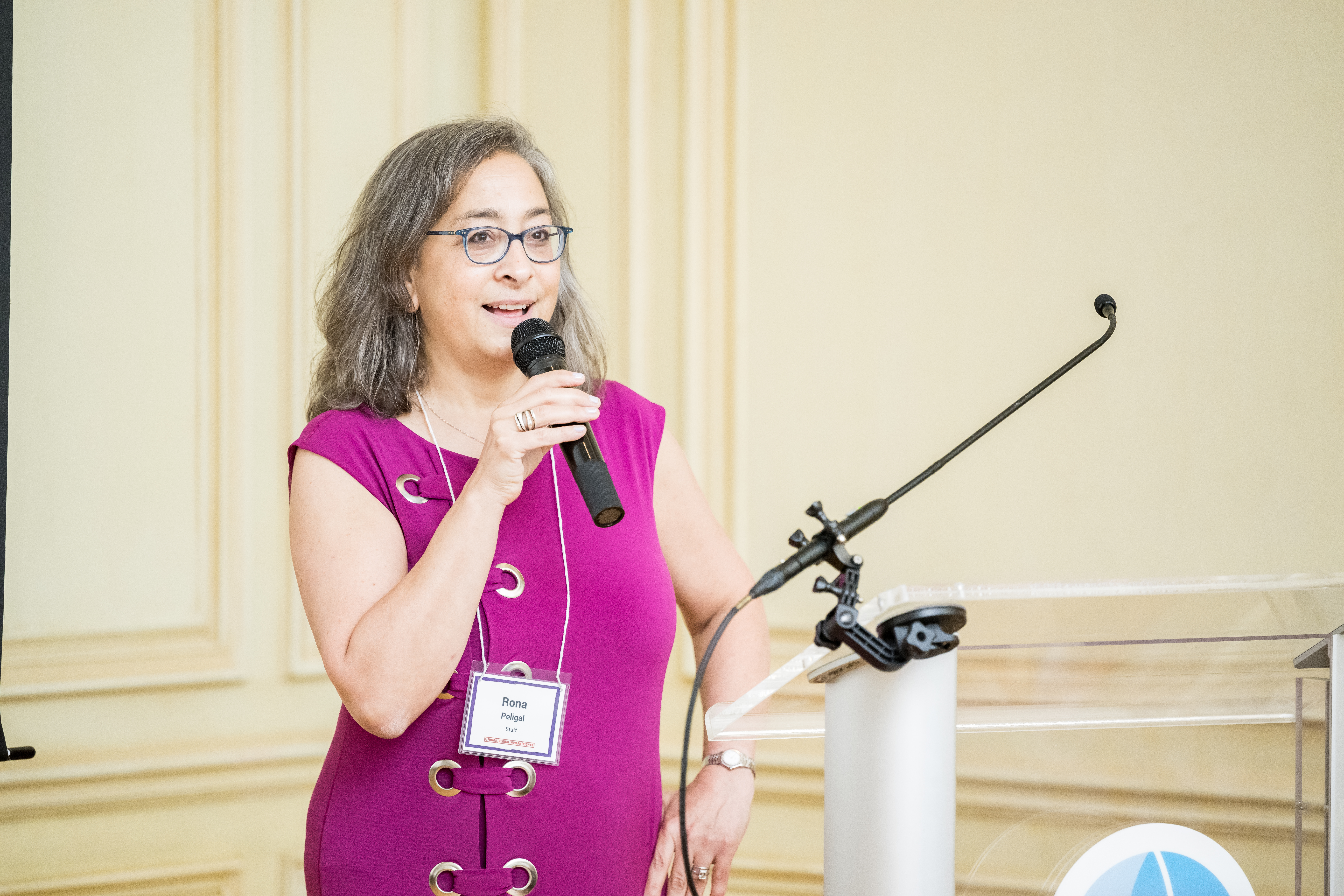
For nearly nine years, Rona Peligal has served as vice president of development and communications at the Fund for Global Human Rights. Since joining in 2017, she has led our fundraising and communications through global crises, growing repression, and unprecedented challenges to the international system.
On her last day with FGHR, Rona shares her parting reflections on the power of human rights with the robust community she helped build:
 Proximity to human rights activists around the world has been the most powerful experience and greatest privilege of my professional career. My profoundest memories of this work at the Fund for Global Human Rights are the moments when I sat with activists on tile floors or small beds to learn how those who suffered or witnessed abuses had the courage to challenge their perpetrators.
I think of my time in India, for example, where FGHR was one of the first funders of a group I visited that provided services, counseling, and so much more to migrants and workers, as well as to women and children who endured endemic sexual violence. Or Mexico, where I was inspired by women domestic workers who, with FGHR’s support, lobbied for and were able to win protections for themselves against abusive employers. Or Morocco, where I saw the ingenuity of youth activists using culture to foster expression and acceptance in the face of government repression.
All of this is human rights work. The strategies employed by defenders are as diverse as the actors themselves: local activists document abuses, engage in advocacy with state and corporate officials, protect those targeted, defend the rights of the marginalized, provide services to vulnerable people, and create film, theater, music, photography, and art to offer different narratives of society. At a time when activism is under threat, I wish more people understood the creativity of human rights defenders and showed them greater solidarity.
Similarly, I wish more people understood that fundraising itself can be a form of activism. It seems to me that most people—other than fundraisers—think the job is “simply” asking for money. It’s so much more than that.
Fundraisers at a place like FGHR are mission-driven, keen on educating and mobilizing people to support grassroots human rights work. We do this by developing long-term, open, and accountable relationships of trust. Human rights fundraisers challenge wealth, power, and control, and enlist donors to support activists who are organizing in pursuit of systemic change. As much as I have loved engaging with activists, I have also relished the time spent with individual and foundation donors, both getting to know them and exploring how we might make a difference together.
I regard this work as deeply political. Being a fundraiser for human rights causes over the past 25 years has taught me so much about the human capacity for both cruelty and courage, selfishness and generosity—lessons often affirmed by what I read and view.
I was deeply moved recently by an interview in The New Yorker magazine with Mehdi Mahmoudian, a co-writer of the Iranian film It Was Just an Accident. I loved the film, directed by Jafar Panahi, for its humanity, tenderness, forthrightness, and complexity. The film is based on the experiences of people like Mahmoudian, who have spent years in prison for calling on the Iranian government to respect the rights of people to protest peacefully and to relinquish their invasive control of people’s lives. Despite being tortured and imprisoned several times—most recently last month—Mahmoudian maintains his activism.
As I have seen with FGHR grantees, he is not alone in demonstrating this courage. I work in human rights because I want to stand in solidarity with people like Mahmoudian and Panahi, who astonishingly find ways around the system, maintaining their integrity and kindness in the face of barbarism.
When I think about those abusing power—and we don’t need to look far to find this—I think about how those with power are often least likely to use it. Instead, it’s the grassroots activists—those with little global standing—who keep going, inspired by love, humanity, and respect. They deserve all the support we can provide.
This is my last piece for the Fund for Global Human Rights. I’ll be continuing my struggle and journey in other places. But FGHR is well placed to stand in solidarity with activists who might otherwise be forgotten. Its work could not be more important, and I’m proud to have been part of it for nearly nine years.

Rona Peligal served as vice president of development and communications at the Fund for Global Human Rights.