Ruth López exposed corruption at the highest levels in El Salvador. Since May 18, 2025, she’s been imprisoned without trial or due process.
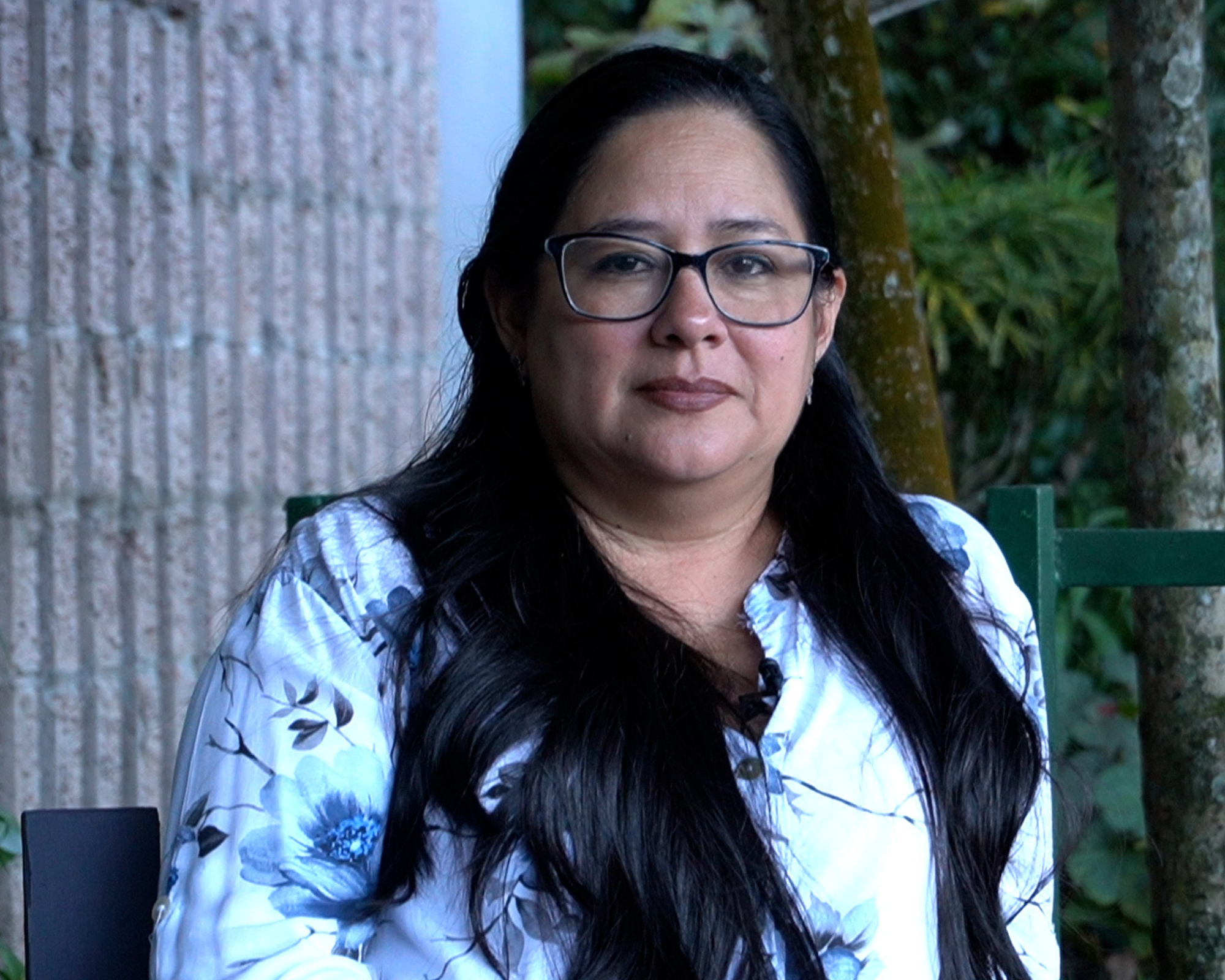
Shortly after 11 pm on Sunday, May 18, 2025, Louis Benvanides shuffled downstairs to answer a knock on his door. Dressed in his pajamas, Louis found himself face to face with armed officers from El Salvador’s national police. They claimed to be investigating a car crash outside and asked to speak to the owner of the vehicle.
Louis went upstairs where his wife, the celebrated lawyer and human rights activist Ruth Eleanora López, instantly saw through the officers’ ruse. “Record this,” she told her husband.
The police hurried Ruth outside, where a waiting officer announced they were arresting her on an administrative warrant issued by the attorney general. They forced her to get dressed in the street and took photos of her in custody.
“Have some decency,” Ruth responded defiantly. “One day, this will all end. You can’t lend yourselves to this.”
El Salvador today is one of the most repressed countries in Latin America. Under the autocratic administration of President Nayib Bukele, the government has utilized the security playbook—a common set of coercive tools, tactics, and technologies employed by authoritarian regimes—to silence dissent and consolidate control.
Bukele, a brash former mayor of San Salvador with a prolific presence on social media, became the country’s youngest president in 2019. By 2021, his upstart Nuevas Ideas party had secured a supermajority in the Salvadoran Legislative Assembly. With the legislature under his thumb, Bukele entrenched his power by purging the Supreme Court of Justice, capturing the judicial system, and amending the constitution to let him run for reelection.
In March 2022, following a spike in gang-related killings, Bukele declared a state of emergency in El Salvador. He suspended constitutional rights—including freedom of association and assembly, private communications, and legal representation—and launched an indiscriminate campaign of mass incarceration.
“In El Salvador, the government can arrest whoever they want,” says Noah Bullock, executive director of grantee partner Cristosal, the human rights organization where Ruth worked has worked since 2021. “There’s no institution in the country that can intervene in any way to protect you, whether you support the regime or not.”
With state institutions captured and the last remaining guardrails removed, Bukele’s government has forcefully prosecuted its so-called “war on gangs.” An estimated 90,000 people have been arrested and indefinitely imprisoned in enormous new facilities like the Terrorism Confinement Center (CECOT), where the US government has paid the Bukele government $4.7 million to hold deported migrants. Conditions in the facility are cruel and inhumane; journalists and researchers have documented shocking cases of overcrowding, torture, and death.
“In El Salvador, there’s one of the most effective, repressive regimes in place. Through the state of exception, you can disappear 100,000 people into prison without due process rights and nobody really says anything because they assume they’re terrorists,” says Noah.
“The whole of the citizenry is, in some ways, a potential enemy of the state.
Cristosal was founded more than two decades ago in the aftermath of El Salvador’s devastating civil war. Since 2000, Cristosal has been a leading voice for democracy and human rights in Central America. Their team of lawyers, researchers, organizers, and activists have challenged abuses of power first in El Salvador, then in Guatemala and Honduras as well. The Fund for Global Human Rights has been proud to support their vital work since 2023.
Ruth joined Cristosal in 2021 as the head of its Anti-Corruption Unit, just two years after Bukele was elected. She led investigations into the graft and abuses of power that have defined Bukele’s tenure in office, including the misuse of public funds during the COVID-19 pandemic, state surveillance using the notorious Pegasus spyware, and the exorbitant costs of constructing the CECOT.
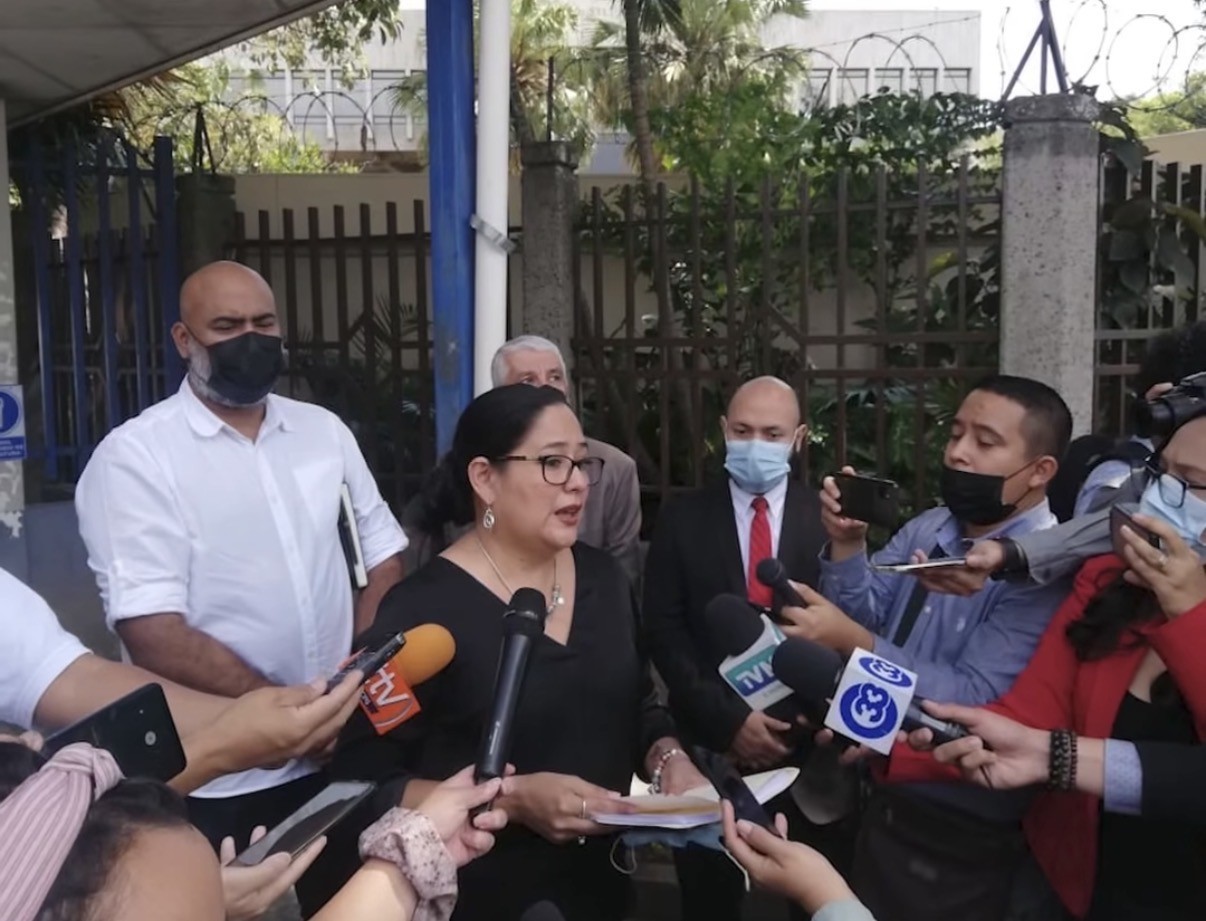
In 2024, the BBC named Ruth one of the 100 most influential women in the world.
“She’s an unbelievable person,” says Noah. “I think that anybody who comes into contact with her testimony feels moved by it.”
Ruth’s fearless advocacy made her a powerful champion for civil liberties and the rule of law. It also made her a potent target for an administration bent on rolling those rights back. Months before her arrest, a police intelligence file on her had circulated online. Ruth had noticed officers photographing her on the street.
“She knew she was going to face this sooner or later,” her husband Louis told the investigative outlet El Faro.
After the officers led Ruth away, she vanished. The only evidence of her arrest was a brief statement, published on X shortly before midnight by the Attorney General’s Office, alleging embezzlement. The accompanying photo showed Ruth standing in the street outside her house between two officers carrying rifles.
For 40 hours, no one—not Louis, not her colleagues at Cristosal, not her lawyers—could locate her. It was as if she had been disappeared from the face of the earth.
Ruth was taken to the Traffic Division jail, where she was held without charge—and without access to the medicine she needs for her chronic health conditions. After nearly two days, authorities informed Ruth’s family of her whereabouts. Louis and her lawyers were permitted short, supervised visits. Finally, they could confirm Ruth was still alive.
Two weeks after her arrest, Ruth was officially charged—not with embezzlement, but with illicit enrichment. A judge ordered a six-month detention during the investigation, and denied her lawyers access to evidence or documentation of the charges. At her initial hearing, Ruth would not stay silent: “I want a public trial,” she declared. “The people deserve to know.”
A month later, Ruth was transferred without explanation from her cell at the Traffic Division jail to the women’s wing of Izalco prison. Guards at Izalco informed Louis and Ruth’s lawyers that they would no longer be allowed to visit her.
Ruth had effectively been disappeared—again.
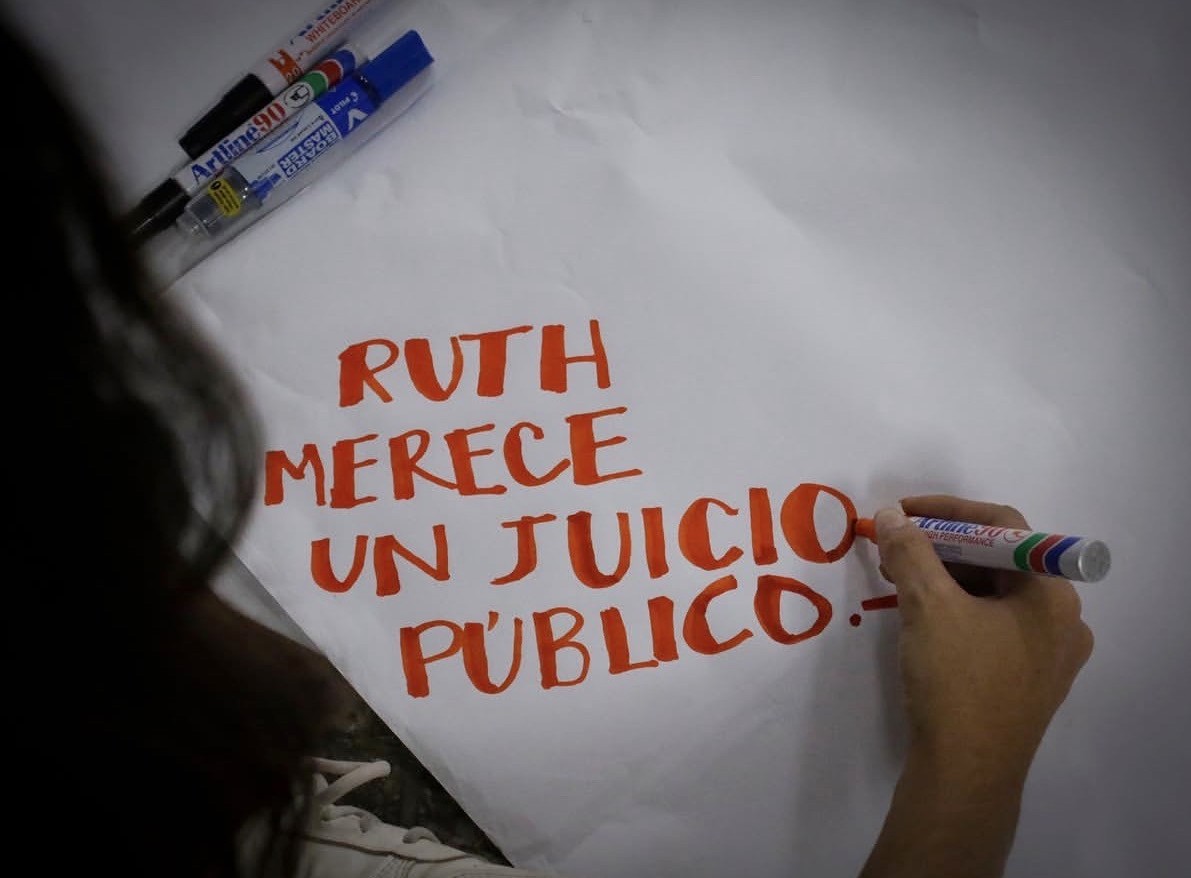
Between 2019 and 2025, Cristosal documented 245 cases of overt political persecution in El Salvador. Nearly 200 of those cases have resulted in criminal proceedings—of which 148 involve human rights defenders, environmental activists, or Indigenous leaders. These stories, each one a life uprooted, are meticulously detailed in their report The Price of Dissent, which was published earlier this year.
“We have been, for the last four years, monitoring the state of exception and building an evidentiary base,” says Noah. “We have demonstrated that arbitrary detention, forced disappearances, and torture has led to the death of, at least according to our investigations, 420 people. We believe there are many more.”
These widespread abuses have had a chilling effect on Salvadoran society. The fearful silence is especially hard for the families of political detainees.
“Every single Salvadoran family or Salvadoran, some way or other, limits the way that they interact with or speak, whether it’s in the hallways or at the kitchen table or at work,” says Noah.
“We hope that families of political opposition, that have been so isolated and stigmatized, community leaders who have been in prison, they can use the report to have more confidence in denouncing the persecution, whether it’s in front of the media, whether it’s in front of international institutions, or even just among family and friends.”
Despite his extensively documented abuses of power, Bukele remains broadly popular in El Salvador. Gang-related violence has declined, in part due to alleged deals negotiated with gangs like MS-13 and Barrio 18. Noah hopes that Cristosal’s reporting and advocacy will help Salvadorans better understand the real consequences of their Faustian bargain with the government.
“People look at this trade-off with the gangs,” says Noah. “My opinion is that the power of the state is much scarier than the power of the gangs.”
As Ruth’s family and lawyers scrambled to locate her, El Salvador’s legislative assembly quietly passed Decree 308.
This law, confirmed with little debate and no public consultation, grants Bukele’s government expansive powers to tax, regulate, monitor, and dissolve civil society organizations. Under the law, any person or organization that receives foreign funding is required to register as a foreign agent with the Interior Ministry. Organizations accused of acting as unregistered foreign agents face sanctions, suspension, or “cancellation.”
El Salvador’s Decree 308 is part of a growing number of so-called foreign agent laws used by authoritarian governments around the world to crack down on human rights defenders. By cutting off funding and creating the pretext for arbitrary arrest, repressive states are able to intimidate civil society into submission without firing a shot.
“The regime has been so effective in destroying the credibility of individuals,” says Noah. “Part of political persecution is creating around individuals and groups the idea that they are enemies of the public order.”
In the months after El Salvador’s law passed, more prominent human rights defenders were arrested for speaking out. For Noah and the remaining activists of Cristosal, the situation became increasingly dangerous. Police followed them in the streets and showed up outside their houses at night.
“We’ll figure out how to adapt—we’ve adapted a thousand times. We’ll keep going,” Noah remembers thinking after the law passed. Cristosal hosted a vigil at their office, gathering their community to find solidarity together. The next morning, a leading constitutional lawyer, Enrique Anaya, who had denounced Ruth’s treatment on national television, was forcefully arrested by officers at his home in San Salvador.
“That was an inflection point,” says Noah. In July 2025, Cristosal announced that it was suspending operations in El Salvador. Noah and the others would continue their work in exile.
One year after her arrest, Ruth is still in Izalco prison. She has yet to be convicted of a crime or even receive a trial. In December 2025, a judge approved six more months of detention.
Bukele’s legislative supermajority continues to rubberstamp his declared state of emergency as the government carries out mass trials. On April 29, 2026, they extended it for the 50th time—once again prolonging the suspension of civil liberties and accelerating El Salvador’s human rights crisis.
But despite the government’s best efforts, the world has not abandoned Ruth López—nor has it forgotten what she stands for. In 2025, Amnesty International named her a prisoner of conscience. The American Bar Association recognized her with their 2025 International Human Rights Award. Earlier this year, the Alliance for Lawyers at Risk named her the recipient of the 2026 Sir Henry Brooke Award.
Most importantly, countless friends, colleagues, and allies continue to speak out tirelessly for her right to due process. For funders, standing by Ruth and groups like Cristosal, who must continue to adapt under increasingly dire circumstances, is essential to demonstrating the bonds of solidarity.
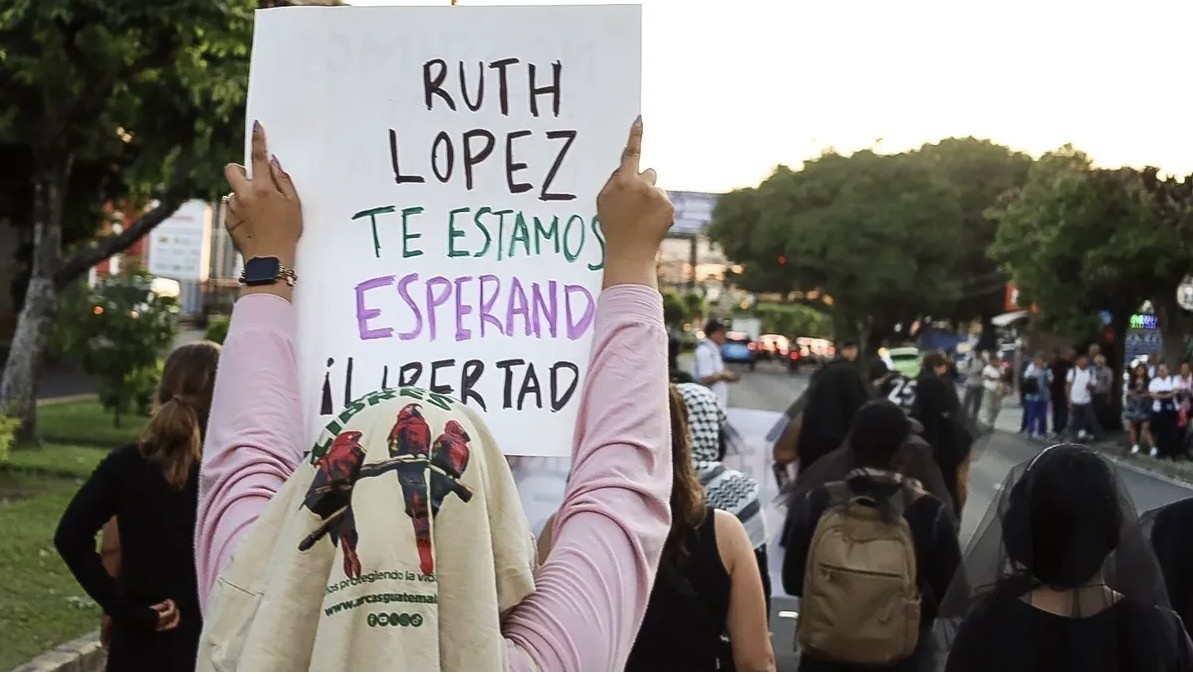
From exile in Guatemala and Honduras, Noah and the rest of Cristosal hope that sharing Ruth’s story will help Salvadorans—and the rest of the world—see the violent price of Bukele’s supposed popularity.
“What gives me hope is that as we go through this process, more and more people will realize that rule of law, that human rights, are not abstract things. They are concrete things,” he says.
“I hope that international solidarity can continue to build and build—build for Ruth, and for everyone.”
Sign up to our newsletter
Add some impact to your inbox.
By submitting this form, you accept that your data will be stored and processed in line with our Privacy Policy.