
Authoritarianism is on the rise, but frontline activists aren’t backing down. Rona Peligal explains what activists need to succeed—and how the Fund for Global Human Rights is supporting them.
In my apartment hangs a poster by the folk artist Ralph Fasanella, emblazoned with the famous words of labor activist Joe Hill: “Don’t Mourn, Organize.”
I find this adage especially useful these days.
We are witnessing the emergence of a new age of authoritarianism. Political scientists have documented the decline of democracy and the rise of authoritarian populism over the last 30 years. Around the world, demagogues and would-be autocrats are employing a common set of tools and tactics to silence opposition and consolidate control—including in the United States, where I live. Civil society is under attack by elites who falsely smear activism as a threat to security. Environmental defenders are being killed in historic numbers. Last year was the deadliest year on record for journalists.
There is much to mourn.
But as a lifelong activist and advocate for social justice, I’ve tried to focus instead on what it means to organize in these perilous times. What does effective activism look like in the context of elected authoritarianism? As a funder, how can we help make a difference?
Searching for answers, I’ve turned to the experts: academics, whose scholarship has informed much of my career in human rights, and the grassroots activists I know personally or through my work. What I have learned we need—organizing, courage, time, and resources—has given me hope and determination in equal measures. Because I see these qualities at work every day in the grassroots groups we support.
Stephanie Luce and Deepak Bhargava, in their book Practical Radicals, quote the late John Lewis, who said, “Ours is not the struggle of one day, one week, or one year. Ours is not the struggle of one judicial appointment or presidential term. Ours is the struggle of a lifetime, or maybe even many lifetimes, and each one of us in every generation must do our part.”
At the Fund for Global Human Rights, we are doing our part. We explicitly support social movements to build power and press authorities for greater justice, transparency, and accountability. Based on more than 20 years of funding frontline human rights work, we understand that these movements are necessary for transformative, sustainable progress. Our allyship is grounded not just in what activists need—multiyear unrestricted support, practical tools, and political solidarity—but in what scholars have argued is necessary to overcome authoritarianism.
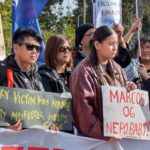
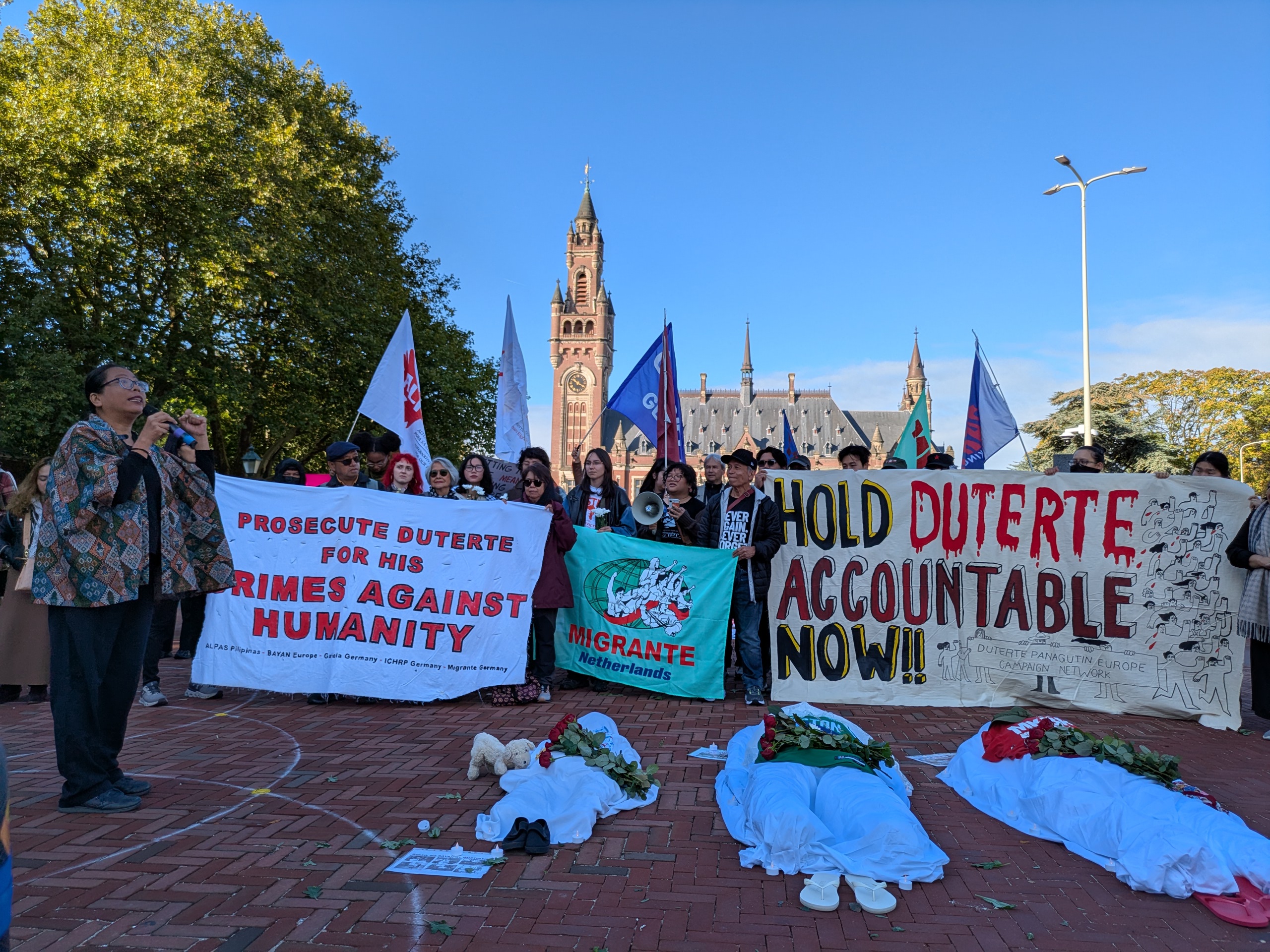
The Philippines provide a good example of what it takes to overcome an abusive government. Earlier this year, former president Rodrigo Duterte was indicted and arrested on an International Criminal Court warrant for his alleged crimes against humanity. His administration violently waged a so-called “war on drugs” for years under the guise of national security. Low-level drug users were extrajudicially executed in the street by government forces and associated vigilantes. The state purposefully manufactured an environment of terror to stifle any dissent.
FGHR grantee partners like RESBAK helped the families of victims when no one else would. Together, they organized, meticulously documented abuses, and pushed back against the culture of impunity. Their collective efforts over many years have been instrumental in building the campaign for accountability.
While Duterte’s arrest in March 2025 was a tremendous step forward, challenges remain. Duterte is fighting to be freed, and the current administration in Manila continues to execute the so-called “war on drugs.” Our work continues.
We know that justice for victims and transformational social change does not happen overnight. Long-term organizing, we have learned, is the foundation of lasting progress.
In his book People, Power, Change, Harvard professor Marshall Ganz—a longtime participant in and scholar of social movements—wrote that “organizing is how an inclusive, interdependent, and united citizenry can transform the desire to achieve change into the power to create change.”
FGHR saw a desire to create change in Syria, where in 2021 we quietly began to support grassroots civil society. At the time, the country had endured a decade of catastrophic civil war and several decades of authoritarian rule. As one of the few international funders willing and able to work in such a complex environment, we sought to seed a new generation of grassroots leaders so that when—not if—a window opened, they would be ready to respond. FGHR’s support enabled women to develop income-generating schemes, youth to understand their potential role in rebuilding society, and journalists to begin circulating useful, unbiased information.
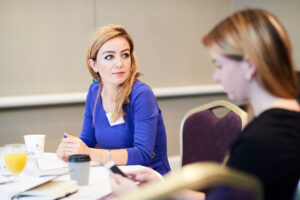
To our collective surprise, the Assad regime was forced out of power last year. Today, the seeds we have planted have become the roots of a growing movement. After years of resisting simply by existing, activists are organizing again. They are transforming their desire for change into collective power.
From Morocco and Myanmar to Guatemala and Uganda, FGHR grantee partners show why it is so important to invest in the long-term power of people. Resourcing interconnected, intersectional activism is the best response we have to the ascendant politics of cruelty.
Ruth Ben-Ghiat, the renowned NYU professor and historian of fascism, has written that “Weak authoritarians fear empathy, a sense of justice and morality, love for others, and collective action. All they have is force and lies.”
The donors, staff, and grantee partners of the Fund for Global Human Rights have what autocrats fear: the necessary ingredients to create a more just world over time. Our collective hope, solidarity, and courage are the antidotes to their authoritarianism.

Rona Peligal is vice president of development and communications at the Fund for Global Human Rights.
Your support makes our work possible. Donate today and your gift will be matched, doubling the impact for grassroots activists defending their communities from authoritarian repression.