David Mattingly, who started FGHR’s Latin America program in 2003, reflects on more than two decades of protecting and promoting human rights in Mexico.

Earlier this month in Mexico City, at a convening of FGHR’s entire community—staff, our Board of Directors, grantee partners, and allies—I was privileged to share a stage with activists and grantmakers who work at the very forefront of human rights in Latin America. As we discussed the opportunities and challenges impacting the movement today, I found myself reflecting on how far this community has come since we made our first grants in Mexico in 2003.
Twenty-three years is a long time in the life of a grantmaking organization. It is longer still in the life of a movement. The people gathered together that day on stage in Mexico City carry a history of transformative human rights activism in ways no grant report can ever capture.
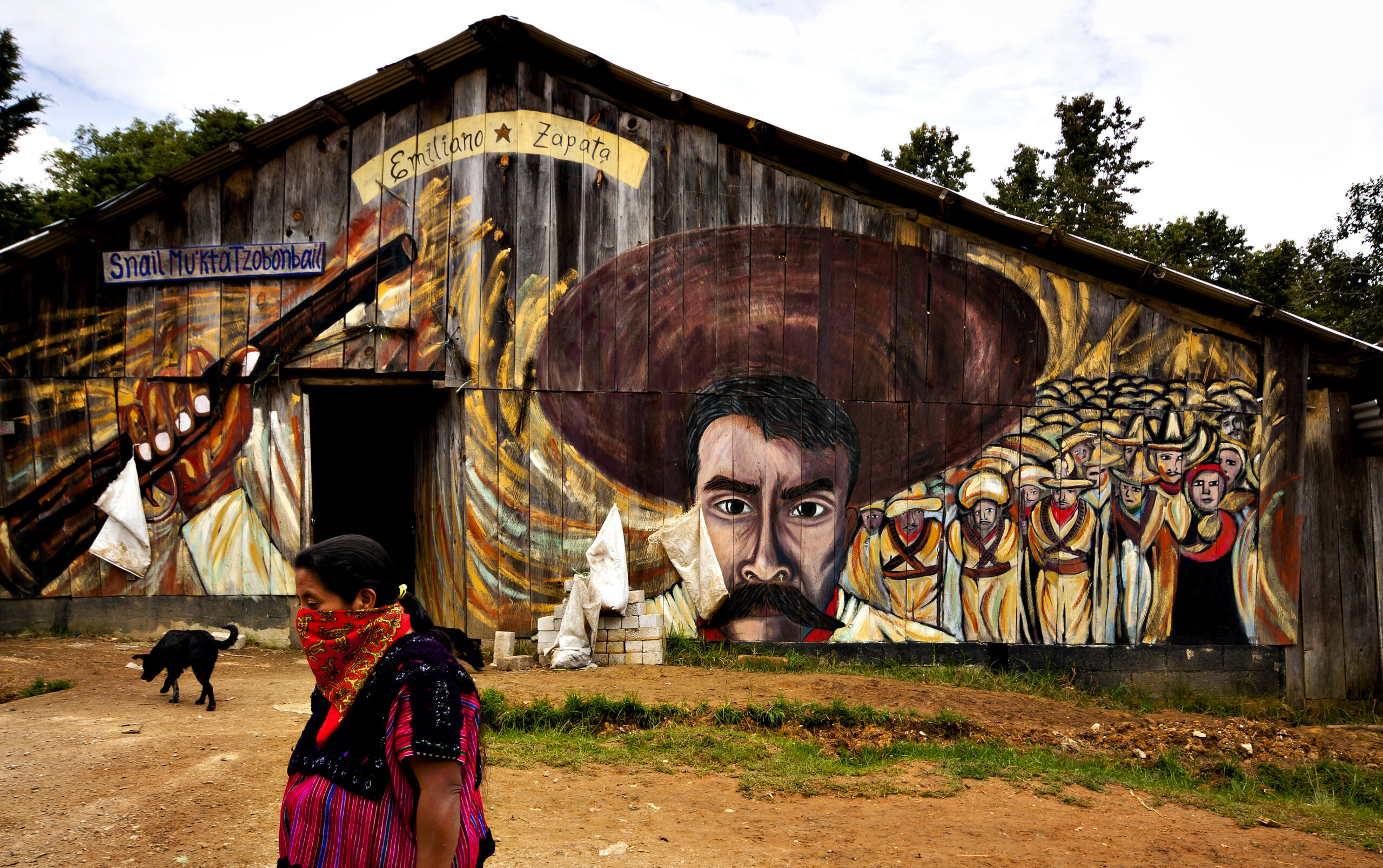
When FGHR began, Mexico was a country in transition. The Zapatista uprising of 1994 had forced the world to look at Chiapas and at the dispossession of Indigenous communities and militarization that followed. The 1997 massacre at Acteal remained an open wound. Yet there was also a real sense of possibility. Seven decades of single-party rule had ended with the elections in 2000. For the first time in a generation, human rights organizations could potentially engage the political process not only as critics from the outside, but as voices that might shape laws and institutions from within.
Our early grants reflected that dual reality. We supported communities in Chiapas rebuilding after conflict and defending their land and autonomy. And we backed groups ready to press a new government to make good on its democratic promises by convening a capacity-building program to share and apply lessons in human rights policy advocacy.
It was also clear that the most urgent needs were not always where the attention was. In Ciudad Juárez and across Chihuahua, young women had been disappearing and turning up dead for a decade, and authorities responded with indifference or worse. The people who refused to accept that were mothers with no background in activism who became, out of necessity, some of the most courageous human rights defenders I have ever met. They had little access to funding and almost no institutional support.
Backing these emerging, family-led groups in the North was a deliberate choice—one I remain proud of. Their persistence helped bring the word feminicidio into Mexico’s legal and public vocabulary. Their demands for accountability reached the Inter-American Court of Human Rights, whose 2009 “Cotton Field” judgment held the Mexican state responsible for failing to prevent and investigate the killings.
The years since have tested everyone. The militarized drug war launched in 2006 unleashed violence on a scale few anticipated. More than 128,000 people are now officially registered as disappeared, and the search collectives formed in response, overwhelmingly led by women, carry forward what the families in Chihuahua began two decades earlier. Through it all, our approach has stayed the same: find the people closest to the problem, trust their judgment, and stay with them for the long haul.
That approach owes a great deal to Ana Paula Hernández, who took over our Latin America program from me and built it into one of the most strategic and creative in the region. In April 2019, Ana Paula, our Honduras consultant Sally O’Neill, our longtime driver Daniel Tuc, and Ana Velásquez of the Council of the Wuxhtaj Peoples of Guatemala died in a car accident in Guatemala. Their absence is felt every day. Many of our grantee partners had turned to Ana Paula in moments of crisis, and Sally’s four decades of commitment shaped our strategy across Central America. They lived this work with joy, and the best tribute we can offer is to keep building on what they started.
Part of how we honor them is a human rights defender protection initiative created in Ana Paula and Sally’s names. Among those it has supported is Andrea Ixchíu, a Maya K’iche’ land defender, journalist, and filmmaker who in 2012 became the first woman to lead the natural resources board of the 48 Cantones of Totonicapán. She has been physically attacked for documenting threats to her community’s forests, and she is exactly the kind of courageous, community-rooted leader that Ana Paula and Sally spent their careers standing beside.

Today, my colleagues have built FGHR’s Mexico program to work at the cutting edge of gender justice. It supports feminist organizations connecting violence against women to land, labor, migration, and climate; groups advancing an intersectional vision of women’s rights that centers those most often left out; and Indigenous women claiming leadership in their communities and in national debates on their own terms.
Listening to them discuss the future of human rights in the region, I was struck by how much the movement’s analysis has deepened. The question is no longer only how to win justice in individual cases, but how to transform the structures that make violence possible in the first place. Mexico now has its first woman president, and constitutional commitments to gender equality that would have seemed remote possibilities in 2003.
Yet the gap between promise and reality remains wide, and civic space is under pressure. That gap is where our partners work every day.
Nearly 25 years in, the movement we have been proud to support is a case study in the collective power of community-led activism. I left Mexico humbled by what grassroots activists have achieved with modest resources and enormous courage—and convinced that the next chapter belongs to the women now leading it.
David Mattingly is vice president for programs at the Fund for Global Human Rights.
Sign up to our newsletter
Add some impact to your inbox.
By submitting this form, you accept that your data will be stored and processed in line with our Privacy Policy.